
The Making of Protein
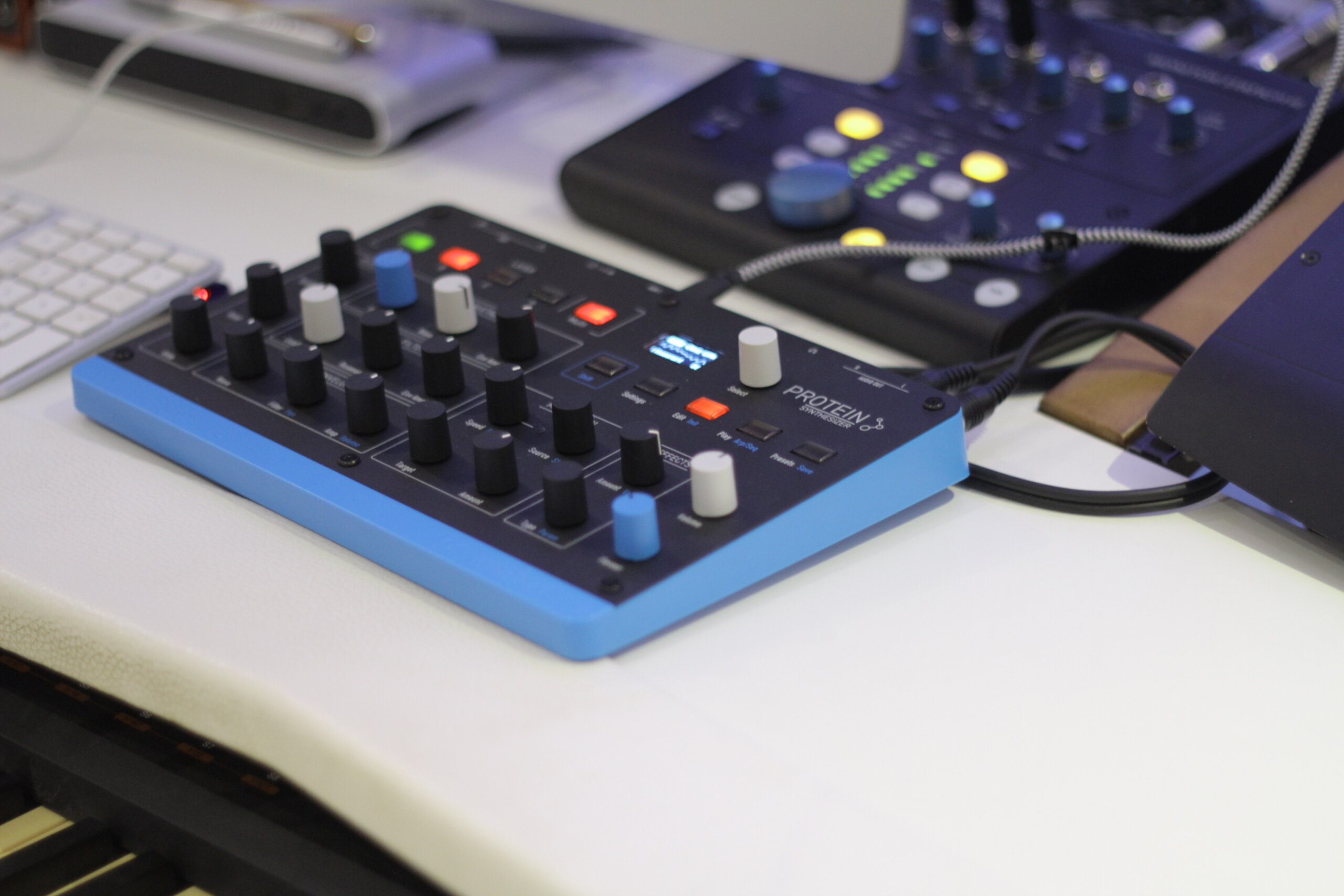
Last November 27th, 2025, in an open event at Morphine Records Berlin, with Waldorf friends and community, we released the Protein, a small, affordable, yet powerful wavetable synthesizer that made a clear statement from our side: “here it is, the accessible entry point into the Waldorf wavetable world.”
Every product’s development is a journey in itself, with its own peculiarities and challenges. Once a product is released, it’s easy to see it as just another device in our hardware catalogue. But the truth is that every synthesizer has its own story and its own character shaped by why it was created, when it happened, and who was involved.
Protein, like the others, has its own story, inseparable from the rest. We invite you to peek behind the curtain and discover how this instrument came to life.
The Making of Protein
Last November 27th, 2025, in an open event at Morphine Records Berlin, with Waldorf friends and community, we released the Protein, a small, affordable, yet powerful wavetable synthesizer that made a clear statement from our side: “here it is, the accessible entry point into the Waldorf wavetable world.”
Every product’s development is a journey in itself, with its own peculiarities and challenges. Once a product is released, it’s easy to see it as just another device in our hardware catalogue. But the truth is that every synthesizer has its own story and its own character shaped by why it was created, when it happened, and who was involved.
Protein, like the others, has its own story, inseparable from the rest. We invite you to peek behind the curtain and discover how this instrument came to life.
For those who know us, it’s no surprise: we’ve been building instruments for 36 years. It all began with the Microwave, an instrument born from the intention to create a big thing which was a small and affordable PPG Wave. In 2004, Waldorf went out of business, but it returned stronger a few years later with something also small: the Blofeld. This small device became a cornerstone of our rebirth, still being produced and sold today.
The original idea behind Protein was, once again, to create something compact and affordable. Even if Waldorf always did this in the past, not only with the Microwave or the Blofeld, but also with the microQ in the 90s and later with the Streichfett product line; years passed, and we wanted to do something new from the perspective of today.
“We wanted to do something small and affordable, but still deep and rich of meaningful features. It’s not a crippled-down product, it’s a full being in itself with its own richness and complexities. We want this not as a cheap version of something more expensive, but as a small and beautiful thing which is powerful, complete, and easy to travel with.” – Rolf Wöhrmann.
For those who know us, it’s no surprise: we’ve been building instruments for 36 years. It all began with the Microwave, an instrument born from the intention to create a big thing which was a small and affordable PPG Wave. In 2004, Waldorf went out of business, but it returned stronger a few years later with something also small: the Blofeld. This small device became a cornerstone of our rebirth, still being produced and sold today.
The original idea behind Protein was, once again, to create something compact and affordable. Even if Waldorf always did this in the past, not only with the Microwave or the Blofeld, but also with the microQ in the 90s and later with the Streichfett product line; years passed, and we wanted to do something new from the perspective of today.
“We wanted to do something small and affordable, but still deep and rich of meaningful features. It’s not a crippled-down product, it’s a full being in itself with its own richness and complexities. We want this not as a cheap version of something more expensive, but as a small and beautiful thing which is powerful, complete, and easy to travel with.” – Rolf Wöhrmann.
Bringing the idea to reality
Protein was an idea Rolf came up with while working on the Microwave 1 Plugin. During the Plugin development, there was a huge task of analysing in depth the original Microwave, going back to the origins of development at Waldorf. Inside the Microwave there was a very special component: the Waldorf ASIC. This chip was responsible for the instrument’s unmistakable sound and character. Understanding it down to its core made possible the foundation of the Microwave 1 Plugin.
But the goal was never to make a simple one-to-one recreation and over. Instead, this whole process was meant to serve as the foundational element of new instruments as well. And this is Protein.
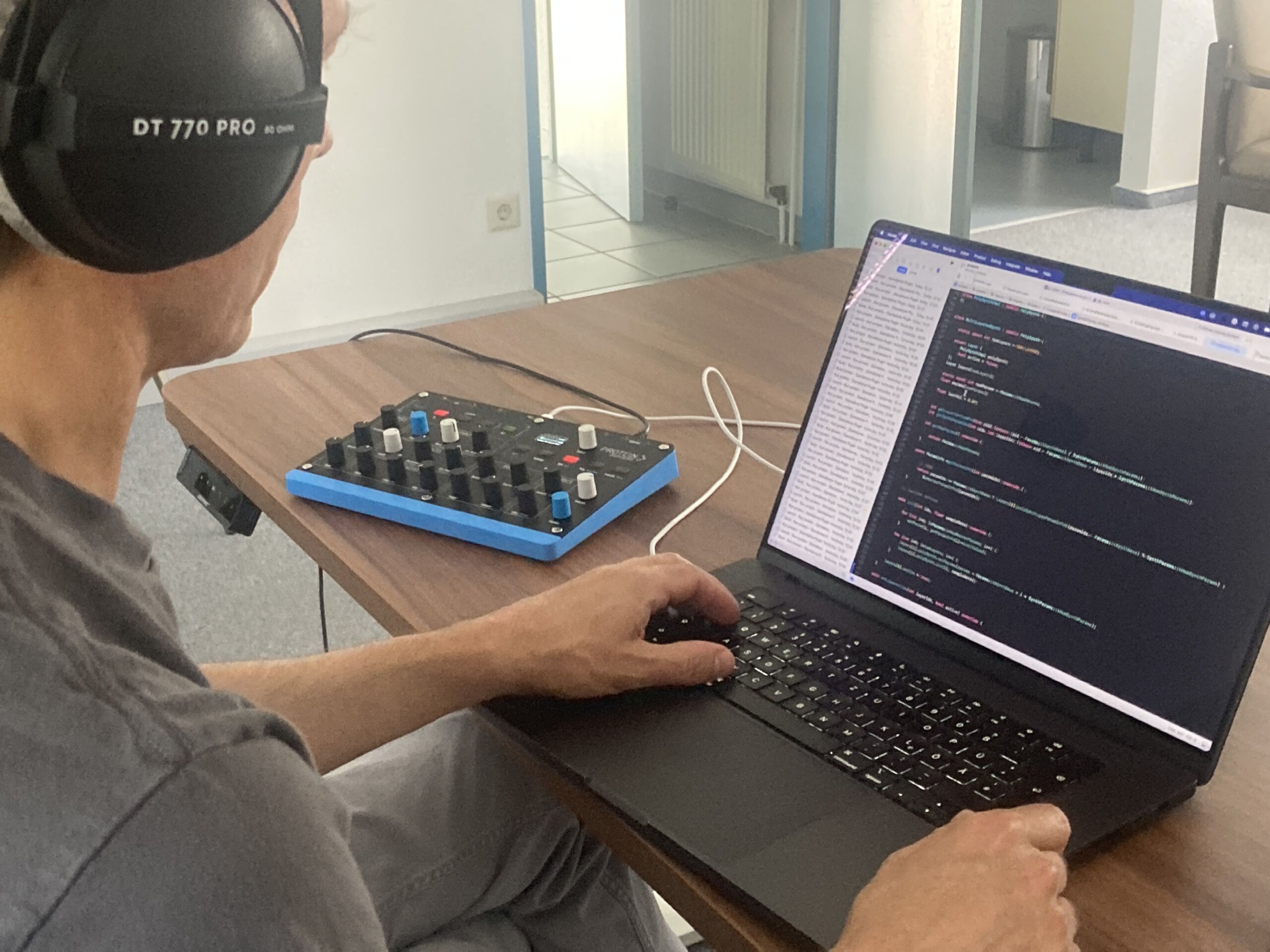
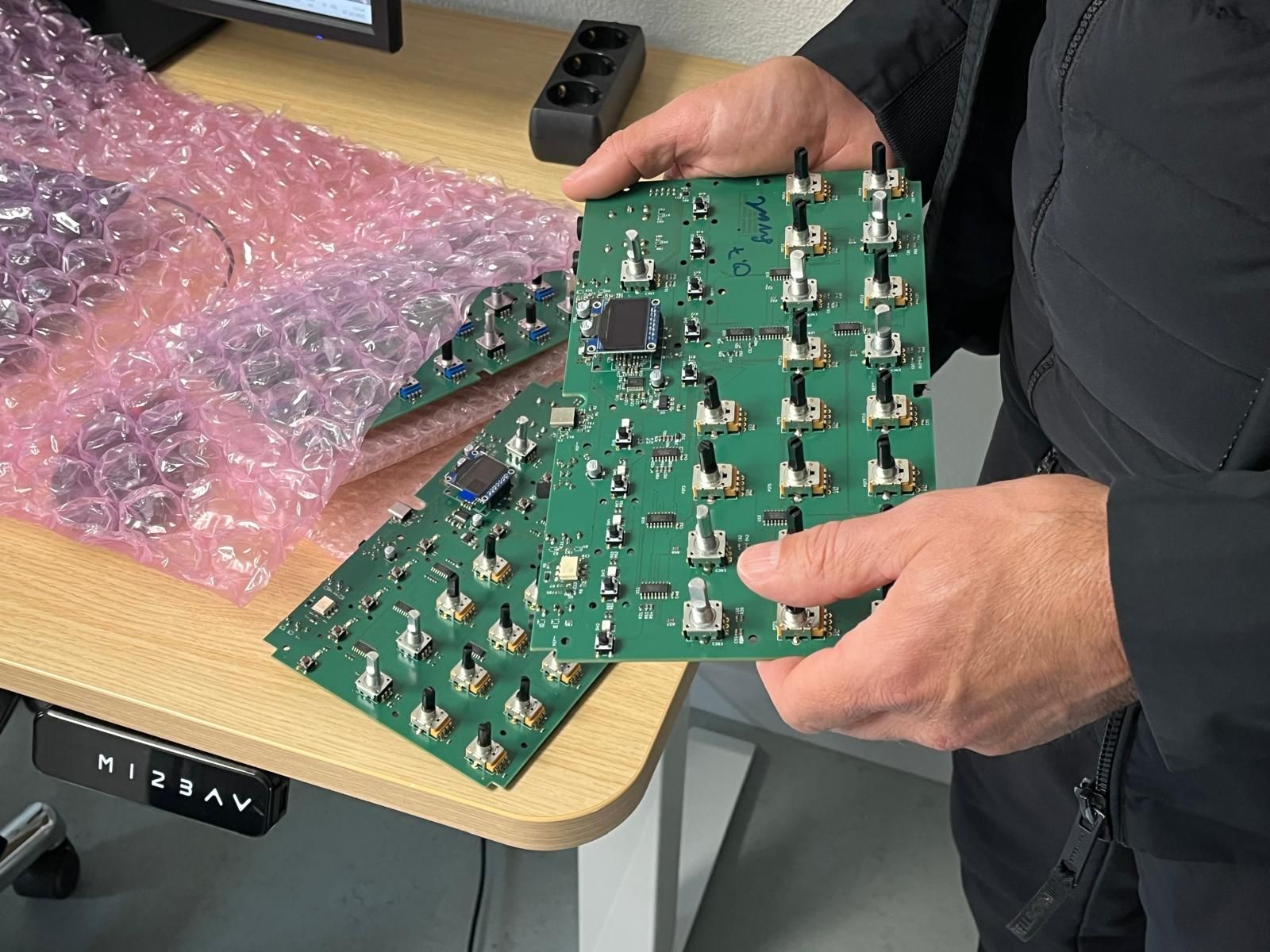
In-house photos of Protein programming and PCBs
Bringing the idea to reality
Protein was an idea Rolf came up with while working on the Microwave 1 Plugin. During the Plugin development, there was a huge task of analysing in depth the original Microwave, going back to the origins of development at Waldorf. Inside the Microwave there was a very special component: the Waldorf ASIC. This chip was responsible for the instrument’s unmistakable sound and character. Understanding it down to its core made possible the foundation of the Microwave 1 Plugin.
But the goal was never to make a simple one-to-one recreation and over. Instead, this whole process was meant to serve as the foundational element of new instruments as well. And this is Protein.
In-house photos of Protein programming and PCBs
“We are going back to the roots of our company and, like being in alternate universe, we are thinking what would those people have done in the today’s environment. That’s the founding idea behind Protein” – Rolf Wöhrmann, at Protein Release Event, Berlin 2025.
It carries the heart and the original wavetable oscillators of the Microwave, giving the characterful gritty 90s sound of the early Waldorf days, but within an absolute modern architecture.
“We are going back to the roots of our company and, like being in alternate universe, we are thinking what would those people have done in the today’s environment. That’s the founding idea behind Protein” – Rolf Wöhrmann, at Protein Release Event, Berlin 2025.
It carries the heart and the original wavetable oscillators of the Microwave, giving the characterful gritty 90s sound of the early Waldorf days, but within an absolute modern architecture.
Why Protein?
The idea behind the name came from reflecting on how synthesizers are usually named. Many names in the synth world lean toward quite specific areas or concepts, even ours. So, the idea here was to move in a different direction and explore something new. That led to a new naming approach: substances that we consume by eating or drinking, not things like “apple” or “beer,” but more biochemical-type substances. The name itself came from a very everyday moment:
“I was consuming for sports this protein bar and I thought ‘well, that makes you strong, it keeps you doing your sport stuff’, and I wanted to have something which has a high musical nutrition factor.” – Rolf Wöhrmann
Why Protein?
The idea behind the name came from reflecting on how synthesizers are usually named. Many names in the synth world lean toward quite specific areas or concepts, even ours. So, the idea here was to move in a different direction and explore something new. That led to a new naming approach: substances that we consume by eating or drinking, not things like “apple” or “beer,” but more biochemical-type substances. The name itself came from a very everyday moment:
“I was consuming for sports this protein bar and I thought ‘well, that makes you strong, it keeps you doing your sport stuff’, and I wanted to have something which has a high musical nutrition factor.” – Rolf Wöhrmann
From the very beginning, Protein was conceived as the first entry in a series, a product line of various instruments sharing the same form factor and different colours, creating a final complete spectrum of small machines to use everywhere.
When deciding where to start, it was considered launching something more exotic, with more focus in functionality, as we did with the Streichfett before. In the end, the choice was to start with what Waldorf is known for and what we master at our core: a wavetable synthesizer.
“Coming back to the question ‘If we have a product line, which one would be the first product in the line?’, […] I wanted to make a statement, coming back to the heart in centre, with the first one being a Wavetable synthesizer, […] and not just coming in by the side door. Like we did many years ago with the Blofeld. So, I thought, if it’s strong, it needs to be some substance which give you power and strength, and that would be protein. And it was not used, so far, to my astonishment!” – Rolf Wöhrmann
From the very beginning, Protein was conceived as the first entry in a series, a product line of various instruments sharing the same form factor and different colours, creating a final complete spectrum of small machines to use everywhere.
When deciding where to start, it was considered launching something more exotic, with more focus in functionality, as we did with the Streichfett before. In the end, the choice was to start with what Waldorf is known for and what we master at our core: a wavetable synthesizer.
“Coming back to the question ‘If we have a product line, which one would be the first product in the line?’, […] I wanted to make a statement, coming back to the heart in centre, with the first one being a Wavetable synthesizer, […] and not just coming in by the side door. Like we did many years ago with the Blofeld. So, I thought, if it’s strong, it needs to be some substance which give you power and strength, and that would be protein. And it was not used, so far, to my astonishment!” – Rolf Wöhrmann
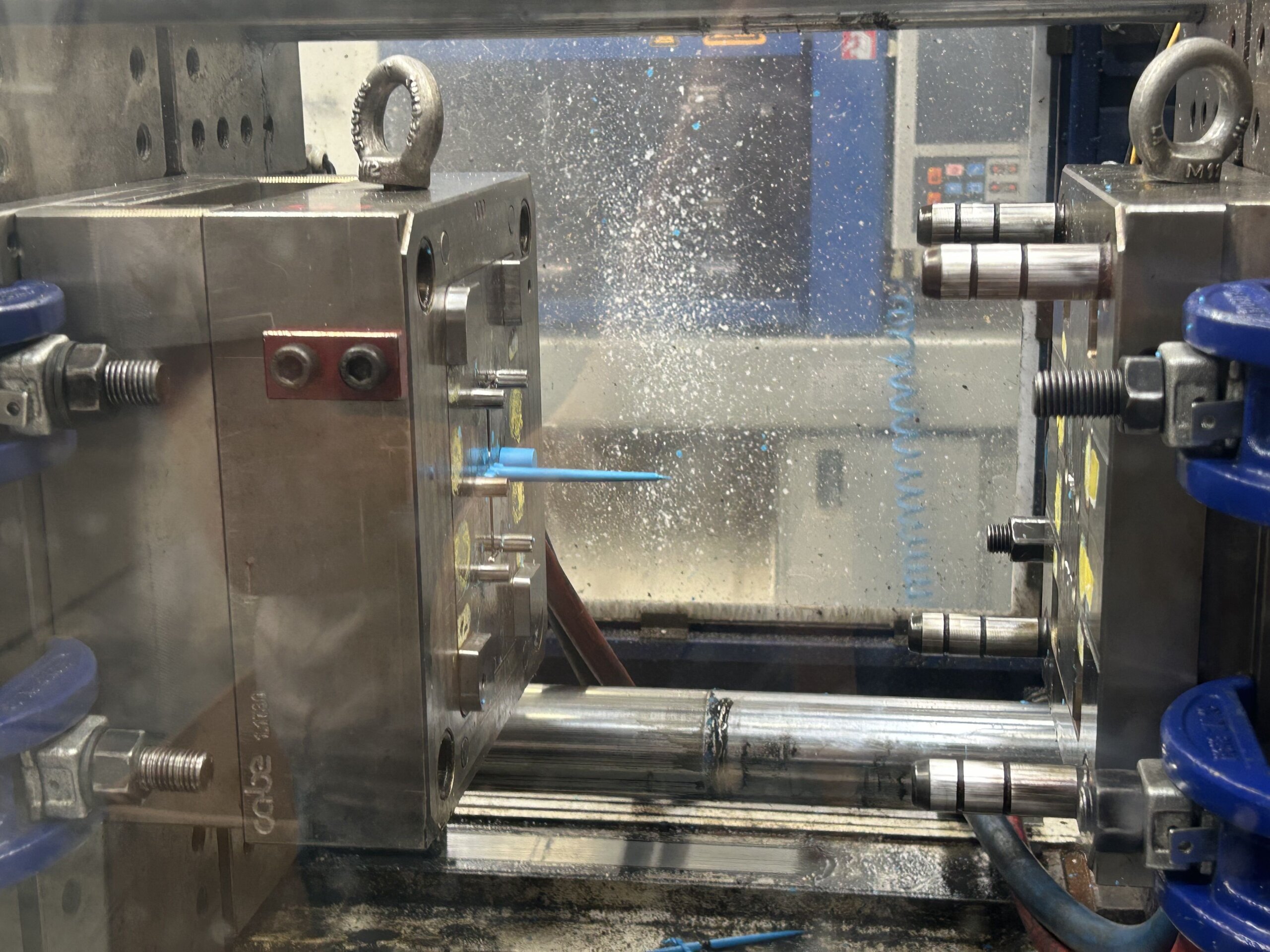
Protein knob production by FATAR in Italy
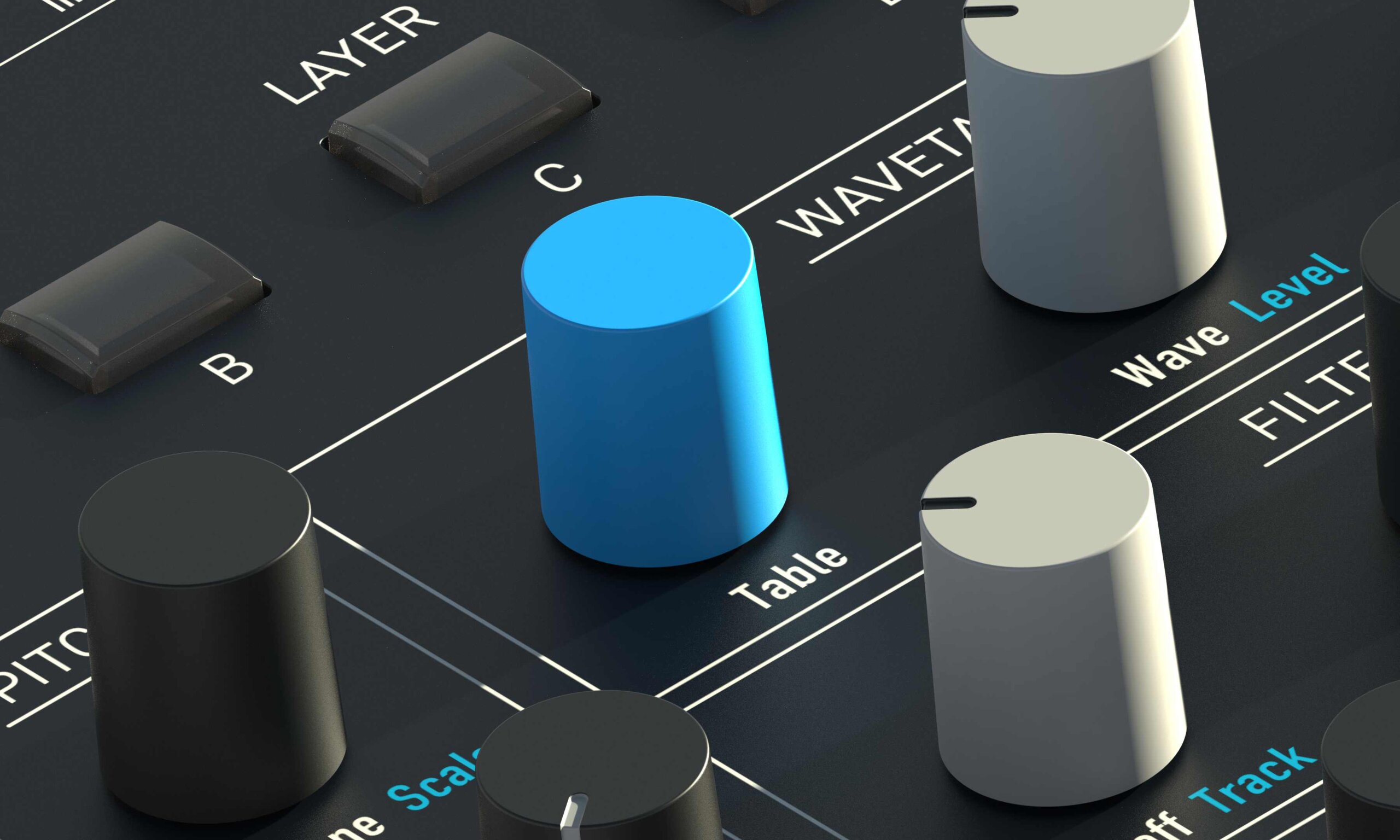
WHY BLUE?
“For the Protein we go back to blue colour, because blue is very much related to PPG. PPG, Microwave. Microwave was also blue, was a different kind of blue, […] because Waldorf was not PPG. So, Waldorf is blue, that’s been the story, and every instrument I see at Waldorf that’s related to wavetable technology shall be blue. So, the Protein is blue.” – Axel Hartmann
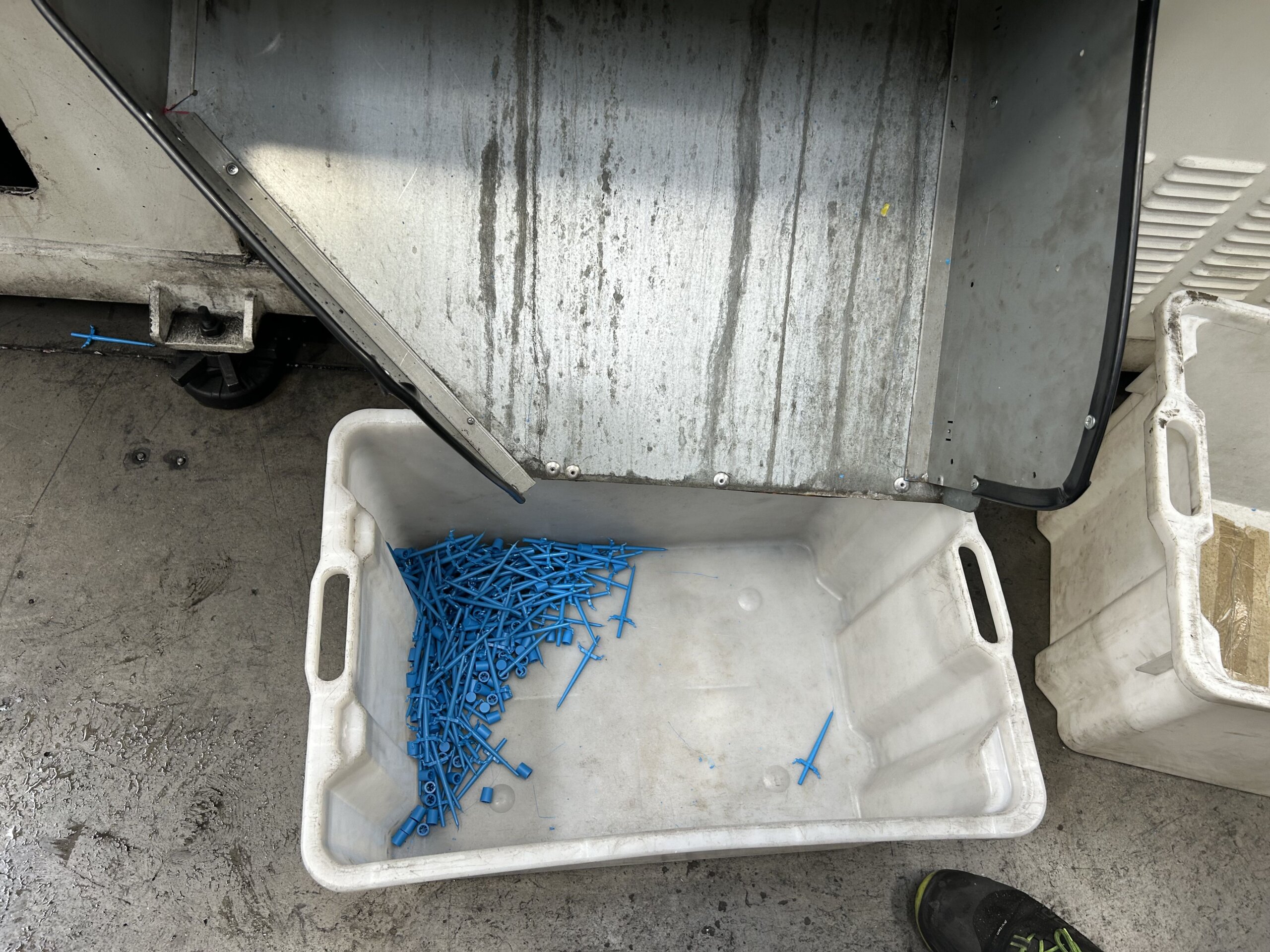
Protein knob production by FATAR in Italy
Protein knob production by FATAR in Italy
WHY BLUE?
“For the Protein we go back to blue colour, because blue is very much related to PPG. PPG, Microwave. Microwave was also blue, was a different kind of blue, […] because Waldorf was not PPG. So, Waldorf is blue, that’s been the story, and every instrument I see at Waldorf that’s related to wavetable technology shall be blue. So, the Protein is blue.” – Axel Hartmann
Process Means Challenges
Protein’s development began, as usual, with a conversation between Rolf and Joachim: What kind of product should we make next? Once the concept of a small product series is decided, Axel joined with early sketches, industrial designs and renderings.
“It was Rolf’s idea to choose to build an instrument, not a follow-up instrument for the Rocket or for Streichfett, but using the synthesis that Waldorf is standing for, and that’s wavetable synthesis. So, this was the idea he was coming to me, and he said: ‘we want to build a series of products in a low budget market, that people can really explore the Waldorf world without spending too much money, especially younger people’. So, I found this idea very intriguing because for an industrial designer it’s easy to build something that is really expensive, but it’s very hard to build something that is easy to build, doesn’t cost a lot in the making, but still is a great product.” – Axel Hartmann
Process means challenges
Protein’s development began, as usual, with a conversation between Rolf and Joachim: What kind of product should we make next? Once the concept of a small product series is decided, Axel joined with early sketches, industrial designs and renderings.
“It was Rolf’s idea to choose to build an instrument, not a follow-up instrument for the Rocket or for Streichfett, but using the synthesis that Waldorf is standing for, and that’s wavetable synthesis. So, this was the idea he was coming to me, and he said: ‘we want to build a series of products in a low budget market, that people can really explore the Waldorf world without spending too much money, especially younger people’. So, I found this idea very intriguing because for an industrial designer it’s easy to build something that is really expensive, but it’s very hard to build something that is easy to build, doesn’t cost a lot in the making, but still is a great product.” – Axel Hartmann
We wanted to show what we can do with all our heart and core in such a small form factor, but as Axel says, the process behind can become a big challenge that makes the Protein special. The paradox: creating a small, simple, and affordable product often requires as much as work like a larger, complex one.
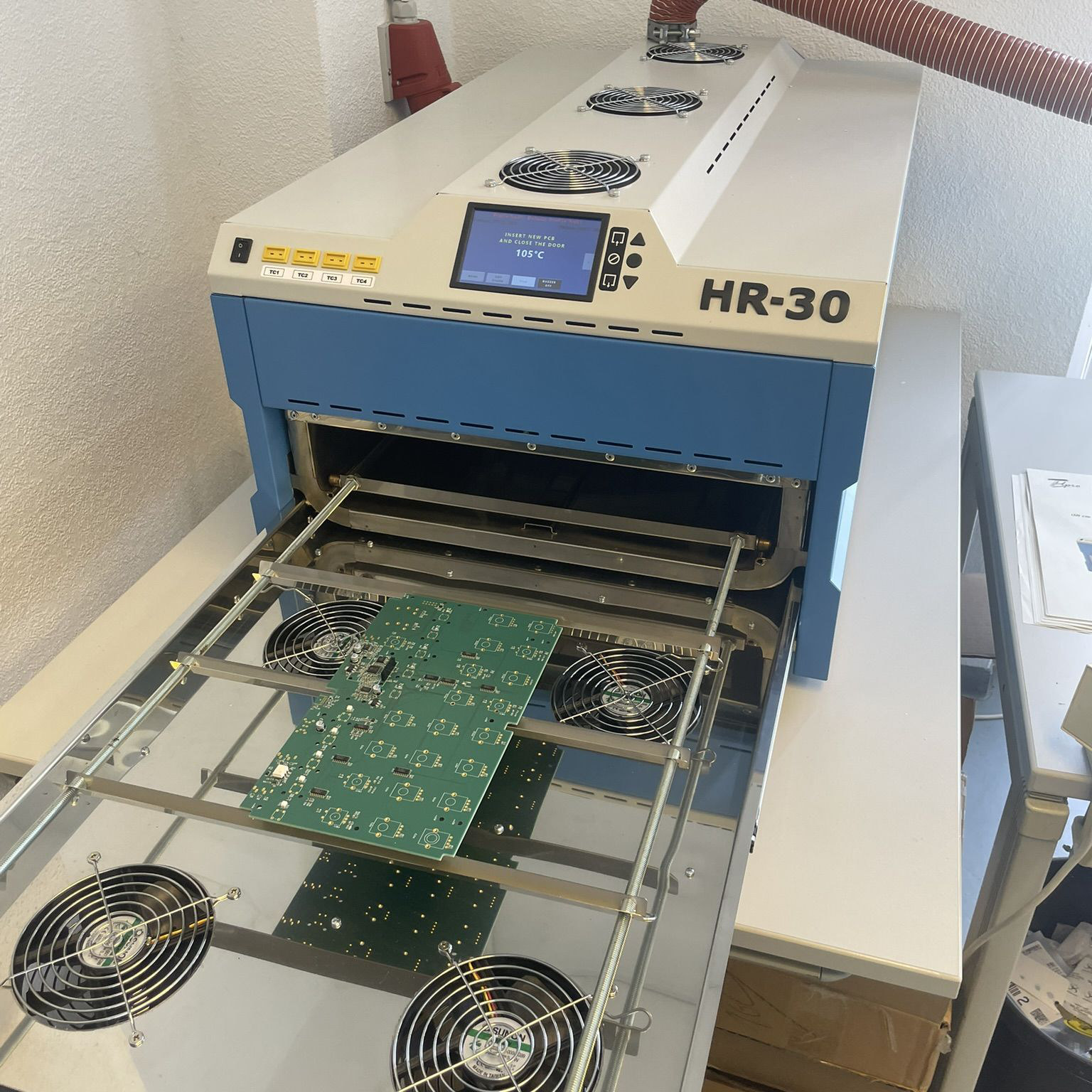
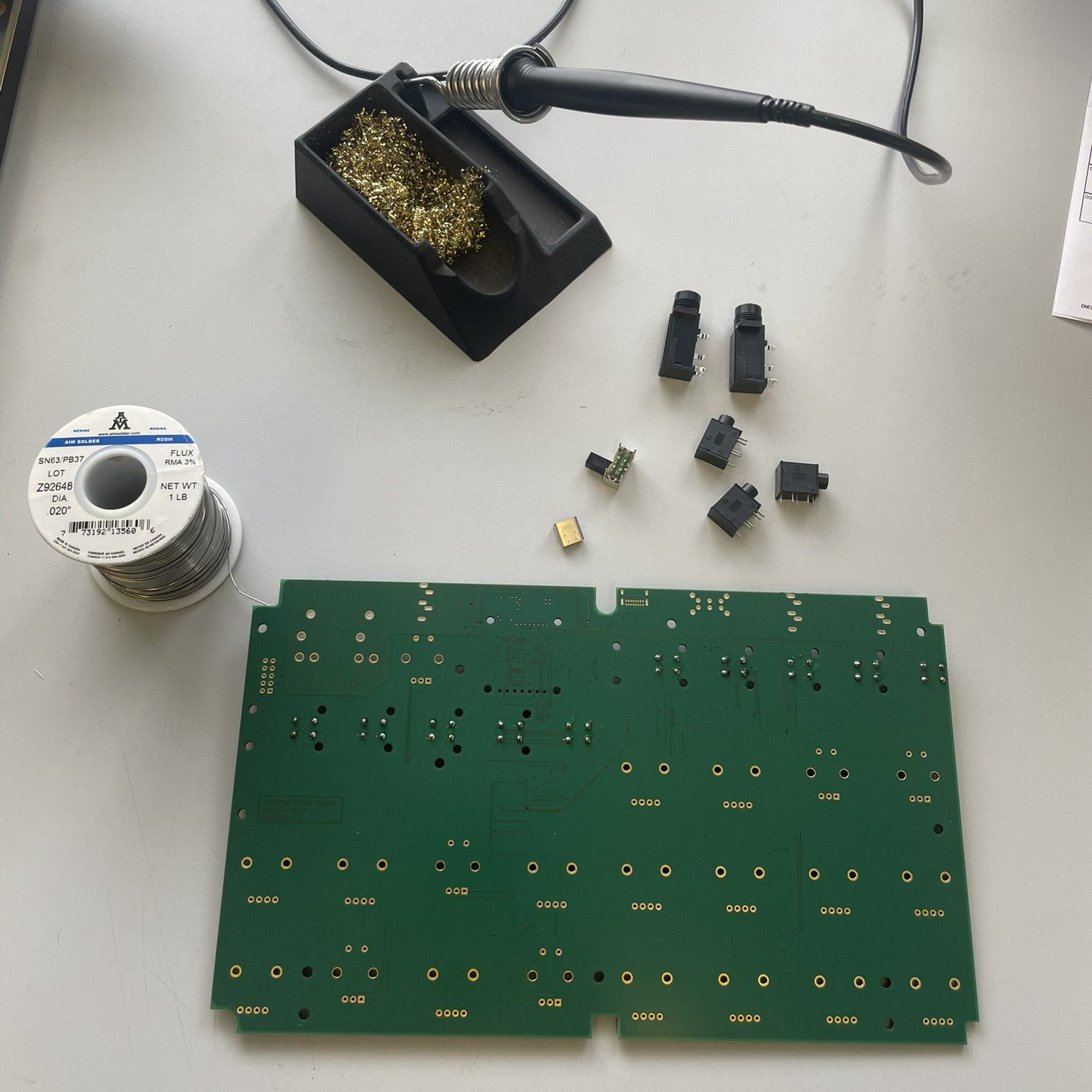
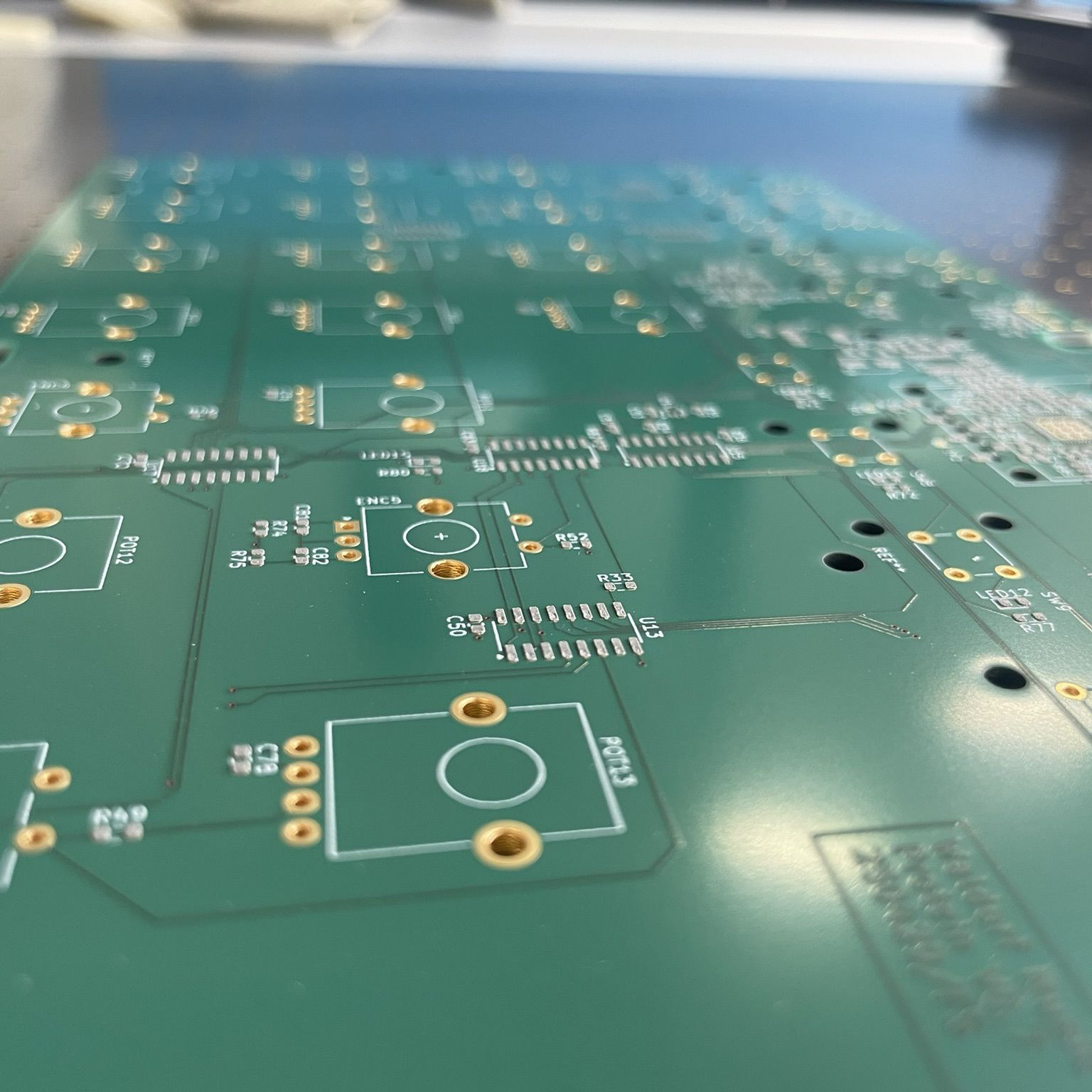
Protein prototype PCB assembly in Remagen
We wanted to show what we can do with all our heart and core in such a small form factor, but as Axel says, the process behind can become a big challenge that makes the Protein special. The paradox: creating a small, simple, and affordable product often requires as much as work like a larger, complex one.
Protein prototype PCB assembly in Remagen
“With a smaller and affordable product, the problem is that you have constrains with the pricing. You have a price in mind, what should it cost maximum, and this dictates what kind of technology you can use. […] With the big expensive instruments like the Quantum you can easily say ‘if this special and beloved features or great idea makes the end price by fifty euros higher or a hundred, it might be worth doing it since the instrument is already in the more expensive range’, you have much more room. But on a small thing where you want to keep a price point, it’s very hard to make this decision of what gets in and what’s not getting in.
And this was a learning for myself because I haven’t done such a small but powerful thing for a long time. Specially, as it should be the first one, needs to be a powerful one, […] it must be substantial. If it would be more a satellite thing, where you have more focus functionality, then it’s much easier. But here it needs to be right. And over the development, it’s a constant battle of what’s possible, and what’s not possible. And we make a decision from the artist perspective, what from an artistic perspective would make sense and what not?” – Rolf Wöhrmann
“With a smaller and affordable product, the problem is that you have constrains with the pricing. You have a price in mind, what should it cost maximum, and this dictates what kind of technology you can use. […] With the big expensive instruments like the Quantum you can easily say ‘if this special and beloved features or great idea makes the end price by fifty euros higher or a hundred, it might be worth doing it since the instrument is already in the more expensive range’, you have much more room. But on a small thing where you want to keep a price point, it’s very hard to make this decision of what gets in and what’s not getting in.
And this was a learning for myself because I haven’t done such a small but powerful thing for a long time. Specially, as it should be the first one, needs to be a powerful one, […] it must be substantial. If it would be more a satellite thing, where you have more focus functionality, then it’s much easier. But here it needs to be right. And over the development, it’s a constant battle of what’s possible, and what’s not possible. And we make a decision from the artist perspective, what from an artistic perspective would make sense and what not?” – Rolf Wöhrmann
A Piece of Our History
Despite challenges and changes, Protein is now a reality that you—the person reading this—can already enjoy. It was created by Waldorf Music, produced by FATAR, tested and refined by different artists and sound designers, and more. But most importantly, it was made by a passionate and hard-working group of people (not as big as you might think) and it’s the result of hundreds of small choices made with intention, knowledge, and care.
What looks like a compact, minimal device is also the result of 36 years of ideas, experiments, successes, mistakes, and development. And that’s the message we would like to share. You’re not just playing or listening to another hardware device, you’re experiencing a piece of our history, shaped by the same spirit that created the Microwave, the Blofeld, and every instrument that defined the sound of Waldorf Music.
Thank you for trusting us and participating in a story that continues to be written.

A Piece of our History
Despite challenges and changes, Protein is now a reality that you—the person reading this—can already enjoy. It was created by Waldorf Music, produced by FATAR, tested and refined by different artists and sound designers, and more. But most importantly, it was made by a passionate and hard-working group of people (not as big as you might think) and it’s the result of hundreds of small choices made with intention, knowledge, and care.
What looks like a compact, minimal device is also the result of 36 years of ideas, experiments, successes, mistakes, and development. And that’s the message we would like to share. You’re not just playing or listening to another hardware device, you’re experiencing a piece of our history, shaped by the same spirit that created the Microwave, the Blofeld, and every instrument that defined the sound of Waldorf Music.
Thank you for trusting us and participating in a story that continues to be written.
