
Interview with Kevin Schroeder:
Inside the Sound World of Hans Zimmer
Inside the Sound World of Hans Zimmer
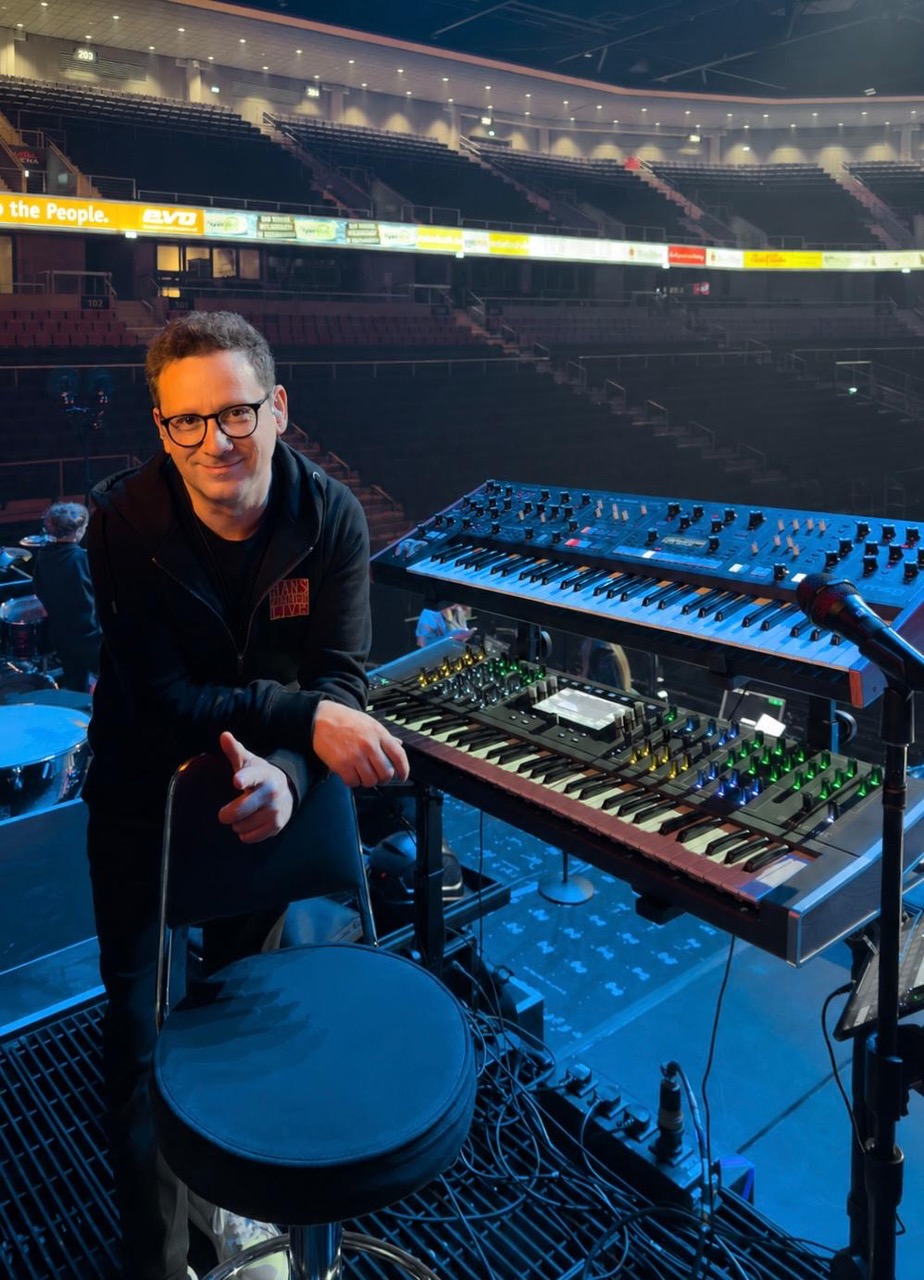
Kevin Schroeder, aka “DejaVu Sound”, is an internationally renowned sound designer, synth programmer, and composer who has dedicated his life to creating sounds we have all heard on the big screen.
He has worked alongside Trevor Morris, Paul Haslinger, and Hans Zimmer on various film scores such as Wonder Woman 1984, Top Gun Maverick, James Bond and Dune. He is currently touring with Hans Zimmer as part of the Hans Zimmer Live Show where all these crazy sounds are played live!
Kevin’s relationship with Waldorf Music is long-lasting. He has created factory sounds for the Quantum & Iridium family, as well as the acclaimed and available soundsets for both instruments. These sound libraries are a valuable addition to the Waldorf ecosystem, offering users a door into the world of cinematic music production.
→ Check out Cinematic Dark Sequences and Synthwave Edition.
We had the opportunity to speak with our friend about his work, creative process, and how he uses the Quantum and Iridium instruments both in the studio and on stage.
//////////////////////////////////////////////////////////////////////////////////////////////////////////////////////
What originally brought you to music, and when did it become more than just a hobby?
Originally, Jean-Michel Jarre brought me to music. His album Oxygene completely inspired me when I was a 10-year-old boy. As a result, my parents gave me a keyboard. At some point, I reached its limits—I wanted more, I wanted to bend sounds and design them myself. So at the age of 14, I bought my first analog synthesizer, a Roland HS-60. It was like a Juno-106, only with speakers.
What still fascinates you about playing keyboards today?
What fascinates me most is that I play synthesizers without being able to read sheet music :)
Was there a moment when you knew: this is going to be my path?
Making music has accompanied me from a very early age and still does today. I will probably spend the rest of my life making music and sounds.
Kevin Schroeder:
Inside the Sound World of Hans Zimmer
Inside the Sound World of Hans Zimmer
Kevin Schroeder, aka “DejaVu Sound”, is an internationally renowned sound designer, synth programmer, and composer who has dedicated his life to creating sounds we have all heard on the big screen.
He has worked alongside Trevor Morris, Paul Haslinger, and Hans Zimmer on various film scores such as Wonder Woman 1984, Top Gun Maverick, James Bond and Dune. He is currently touring with Hans Zimmer as part of the Hans Zimmer Live Show where all these crazy sounds are played live!
Kevin’s relationship with Waldorf Music is long-lasting. He has created factory sounds for the Quantum & Iridium family, as well as the acclaimed and available soundsets for both instruments. These sound libraries are a valuable addition to the Waldorf ecosystem, offering users a door into the world of cinematic music production.
→ Check out Cinematic Dark Sequences and Synthwave Edition.
We had the opportunity to speak with our friend about his work, creative process, and how he uses the Quantum and Iridium instruments both in the studio and on stage.
What originally brought you to music, and when did it become more than just a hobby?
Originally, Jean-Michel Jarre brought me to music. His album Oxygene completely inspired me when I was a 10-year-old boy. As a result, my parents gave me a keyboard. At some point, I reached its limits—I wanted more, I wanted to bend sounds and design them myself. So at the age of 14, I bought my first analog synthesizer, a Roland HS-60. It was like a Juno-106, only with speakers.
What still fascinates you about playing keyboards today?
What fascinates me most is that I play synthesizers without being able to read sheet music :)
Was there a moment when you knew: this is going to be my path?
Making music has accompanied me from a very early age and still does today. I will probably spend the rest of my life making music and sounds.
Kevin Schroeder:
Inside the Sound World of Hans Zimmer
Inside the Sound World of Hans Zimmer
Kevin Schroeder, aka “DejaVu Sound”, is an internationally renowned sound designer, synth programmer, and composer who has dedicated his life to creating sounds we have all heard on the big screen.
He has worked alongside Trevor Morris, Paul Haslinger, and Hans Zimmer on various film scores such as Wonder Woman 1984, Top Gun Maverick, James Bond and Dune. He is currently touring with Hans Zimmer as part of the Hans Zimmer Live Show where all these crazy sounds are played live!
Kevin’s relationship with Waldorf Music is long-lasting. He has created factory sounds for the Quantum & Iridium family, as well as the acclaimed and available soundsets for both instruments. These sound libraries are a valuable addition to the Waldorf ecosystem, offering users a door into the world of cinematic music production.
→ Check out Cinematic Dark Sequences and Synthwave Edition.
We had the opportunity to speak with our friend about his work, creative process, and how he uses the Quantum and Iridium instruments both in the studio and on stage.
What originally brought you to music, and when did it become more than just a hobby?
Originally, Jean-Michel Jarre brought me to music. His album Oxygene completely inspired me when I was a 10-year-old boy. As a result, my parents gave me a keyboard. At some point, I reached its limits—I wanted more, I wanted to bend sounds and design them myself. So at the age of 14, I bought my first analog synthesizer, a Roland HS-60. It was like a Juno-106, only with speakers.
What still fascinates you about playing keyboards today?
What fascinates me most is that I play synthesizers without being able to read sheet music :)
Was there a moment when you knew: this is going to be my path?
Making music has accompanied me from a very early age and still does today. I will probably spend the rest of my life making music and sounds.
Live Performance & Role
What makes a truly great live performance for you? Do you remember a specific one?
I don’t have a recipe for that. Normally, I’m a studio musician and had never played on an international stage before. I simply play according to how I feel in the moment. If emotions get the better of me during a live performance, my entire keyboard setup might start shaking quite a bit :-D
How much is preparation and how much happens spontaneously on stage?
Last year, we rehearsed in London for four weeks. During that time, we revised the pieces, shortened or extended them, and developed new sounds along the way.
We played through the show countless times beforehand. During the show, you indirectly continue experimenting with your playing style and whether the sounds actually fit. Sometimes you simply have to let certain things breathe to feel whether they work.
What are the biggest challenges of playing in complex setups and working in Hans Zimmer’s environment?
The biggest challenge is playing the right notes :-))
You learn new things with every show. Sometimes I change my playing style, adjust my sounds on the Waldorf Quantum, or even replace sounds altogether.
What is it like to be part of the musical environment around Hans Zimmer?
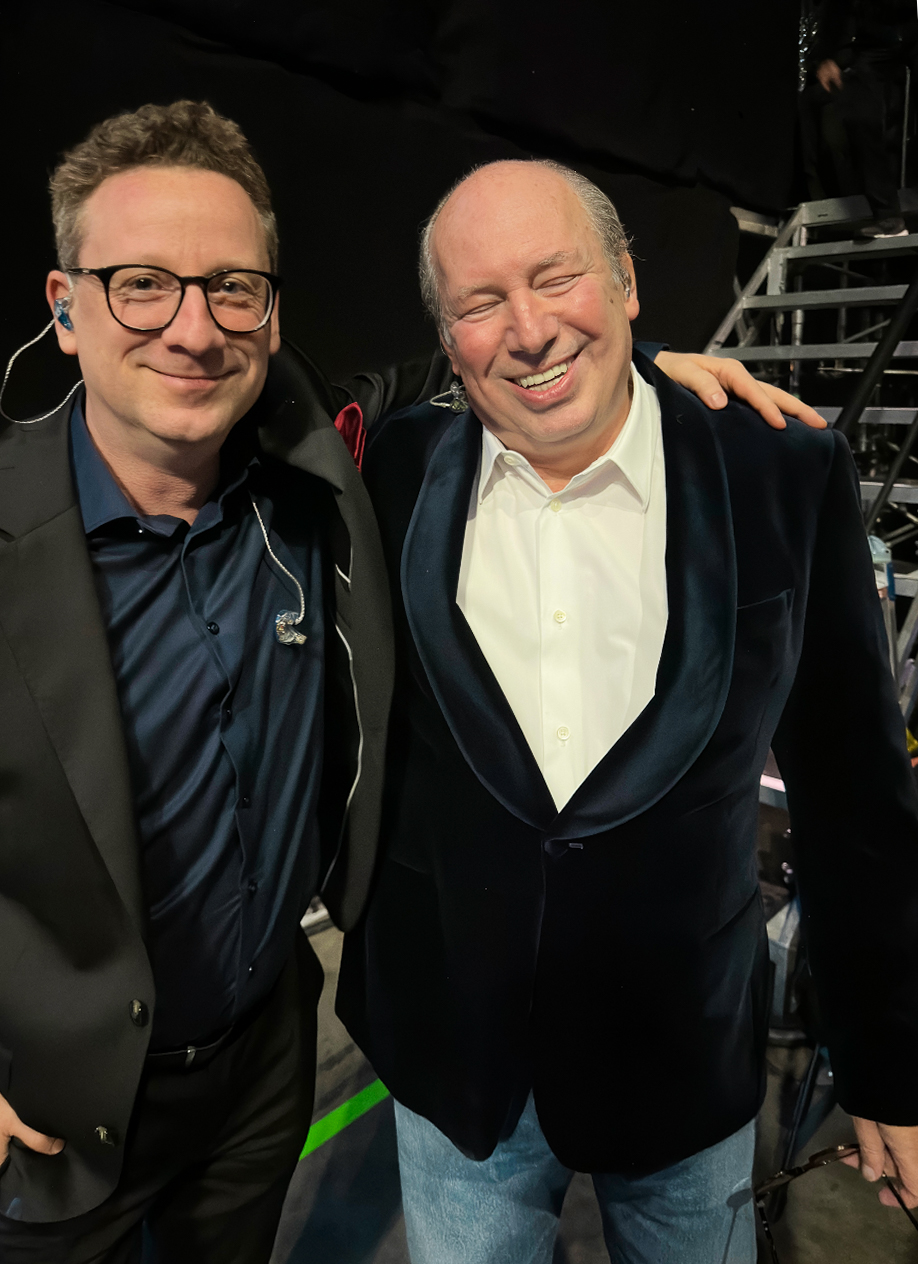
It’s exciting to constantly invent new things together with Hans.
Why should it always be the Vangelis lead sound when you essentially have endless possibilities to try something new?
In Hans’ environment, you can really let loose and make some serious noise.
How would you describe your role when working with Hans Zimmer on a project?
When we work on a project, I usually fly to Los Angeles and we sit together in the studio. We watch the film, talk about ideas, colors, and what defines the film.
Then I sit down in the studio and start programming the first sounds that might fit the film. At the same time, I automatically begin composing a few things that may point in the right direction. That’s how small ideas grow into something larger.
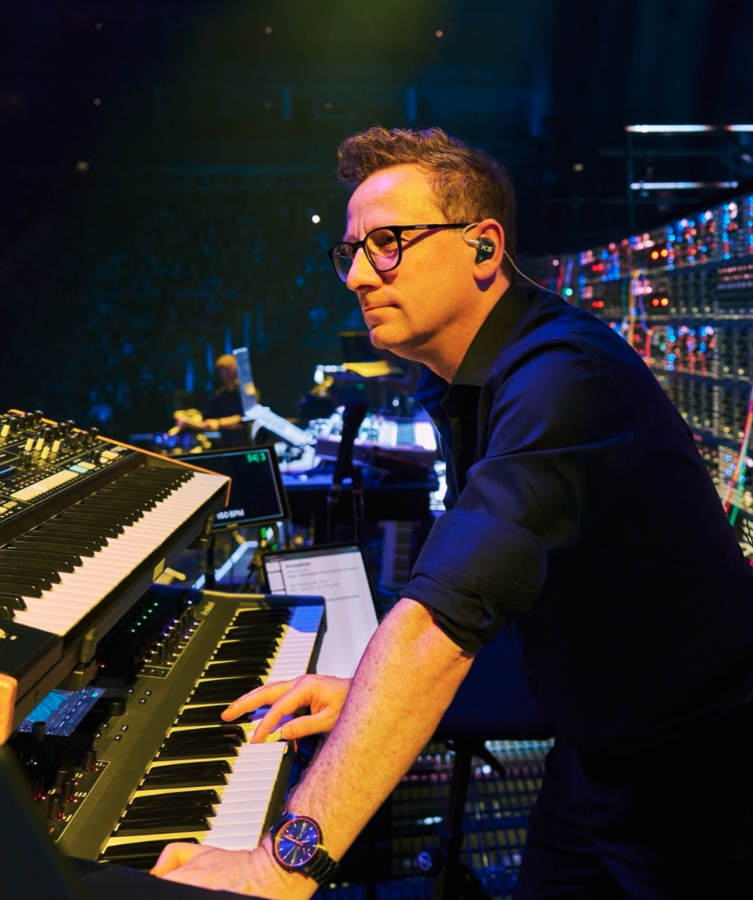
Hans Zimmer Live Show 2026 // Photo by @suzanneteresaphoto
How do you bring studio compositions to the stage, and what role do you play in that process?
Things are prepared in advance that, for example, run in sync on stage via sequencers. I also pre-programmed the bat flaps in The Dark Knight show using a synth called ZebraHZ by u-he.
It’s impossible to play all synth lines live on stage, so some sequencers have to support the performance.
As early as 2023, I reworked the soundtrack for Top Gun: Maverick so that it would function well on stage.
There are so many people on the Hans Zimmer tour stage, it’s incredible. Can you give us some insight into how everyone is organized and prepared?
There are about 150 people on the tour, and everyone has their task to ensure everything runs smoothly.
On such a long tour, is there room for artistic decisions to evolve over time?
You’re constantly working on yourself to become even better and make the show even more exciting.
Live Performance & Role
What makes a truly great live performance for you? Do you remember a specific one?
I don’t have a recipe for that. Normally, I’m a studio musician and had never played on an international stage before. I simply play according to how I feel in the moment. If emotions get the better of me during a live performance, my entire keyboard setup might start shaking quite a bit :-D
How much is preparation and how much happens spontaneously on stage?
Last year, we rehearsed in London for four weeks. During that time, we revised the pieces, shortened or extended them, and developed new sounds along the way.
We played through the show countless times beforehand. During the show, you indirectly continue experimenting with your playing style and whether the sounds actually fit. Sometimes you simply have to let certain things breathe to feel whether they work.
What are the biggest challenges of playing in complex setups and working in Hans Zimmer’s environment?
The biggest challenge is playing the right notes :-))
You learn new things with every show. Sometimes I change my playing style, adjust my sounds on the Waldorf Quantum, or even replace sounds altogether.
What is it like to be part of the musical environment around Hans Zimmer?
It’s exciting to constantly invent new things together with Hans.
Why should it always be the Vangelis lead sound when you essentially have endless possibilities to try something new?
In Hans’ environment, you can really let loose and make some serious noise.
How would you describe your role when working with Hans Zimmer on a project?
When we work on a project, I usually fly to Los Angeles and we sit together in the studio. We watch the film, talk about ideas, colors, and what defines the film.
Then I sit down in the studio and start programming the first sounds that might fit the film. At the same time, I automatically begin composing a few things that may point in the right direction. That’s how small ideas grow into something larger.
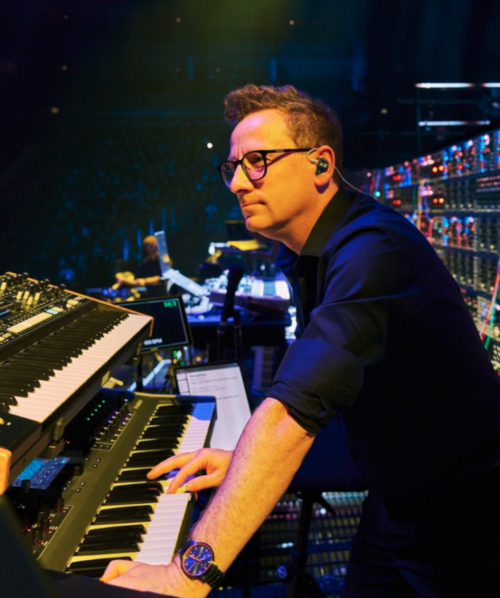
Hans Zimmer Live Show 2026 // Photo by @suzanneteresaphoto
How do you bring studio compositions to the stage, and what role do you play in that process?
Things are prepared in advance that, for example, run in sync on stage via sequencers. I also pre-programmed the bat flaps in The Dark Knight show using a synth called ZebraHZ by u-he.
It’s impossible to play all synth lines live on stage, so some sequencers have to support the performance.
As early as 2023, I reworked the soundtrack for Top Gun: Maverick so that it would function well on stage.
There are so many people on the Hans Zimmer tour stage, it’s incredible. Can you give us some insight into how everyone is organized and prepared?
There are about 150 people on the tour, and everyone has their task to ensure everything runs smoothly.
On such a long tour, is there room for artistic decisions to evolve over time?
You’re constantly working on yourself to become even better and make the show even more exciting.
Live Performance & Role
What makes a truly great live performance for you? Do you remember a specific one?
I don’t have a recipe for that. Normally, I’m a studio musician and had never played on an international stage before. I simply play according to how I feel in the moment. If emotions get the better of me during a live performance, my entire keyboard setup might start shaking quite a bit :-D
How much is preparation and how much happens spontaneously on stage?
Last year, we rehearsed in London for four weeks. During that time, we revised the pieces, shortened or extended them, and developed new sounds along the way.
We played through the show countless times beforehand. During the show, you indirectly continue experimenting with your playing style and whether the sounds actually fit. Sometimes you simply have to let certain things breathe to feel whether they work.
What are the biggest challenges of playing in complex setups and working in Hans Zimmer’s environment?
The biggest challenge is playing the right notes :-))
You learn new things with every show. Sometimes I change my playing style, adjust my sounds on the Waldorf Quantum, or even replace sounds altogether.
What is it like to be part of the musical environment around Hans Zimmer?
It’s exciting to constantly invent new things together with Hans.
Why should it always be the Vangelis lead sound when you essentially have endless possibilities to try something new?
In Hans’ environment, you can really let loose and make some serious noise.
How would you describe your role when working with Hans Zimmer on a project?
When we work on a project, I usually fly to Los Angeles and we sit together in the studio. We watch the film, talk about ideas, colors, and what defines the film.
Then I sit down in the studio and start programming the first sounds that might fit the film. At the same time, I automatically begin composing a few things that may point in the right direction. That’s how small ideas grow into something larger.
Hans Zimmer Live Show 2026 // Photo by @suzanneteresaphoto
How do you bring studio compositions to the stage, and what role do you play in that process?
Things are prepared in advance that, for example, run in sync on stage via sequencers. I also pre-programmed the bat flaps in The Dark Knight show using a synth called ZebraHZ by u-he.
It’s impossible to play all synth lines live on stage, so some sequencers have to support the performance.
As early as 2023, I reworked the soundtrack for Top Gun: Maverick so that it would function well on stage.
There are so many people on the Hans Zimmer tour stage, it’s incredible. Can you give us some insight into how everyone is organized and prepared?
There are about 150 people on the tour, and everyone has their task to ensure everything runs smoothly.
On such a long tour, is there room for artistic decisions to evolve over time?
You’re constantly working on yourself to become even better and make the show even more exciting.
Setup & Technology on Stage
We noticed that alongside other major brands, you use several Waldorf instruments, including 2–3 Quantums and 1–2 Iridium keyboards. How does Waldorf fit into such a large setup with different manufacturers?
Every synthesizer has its own sound. The Quantum and Iridium fit particularly well on stage because of their versatility.
Of course, we also use the Quantum for sequencer sounds, which can be realized very well with its fast filters.
Is it more about sound layering, redundancy, or different roles within the setup?
It’s about layering different tonal colors.
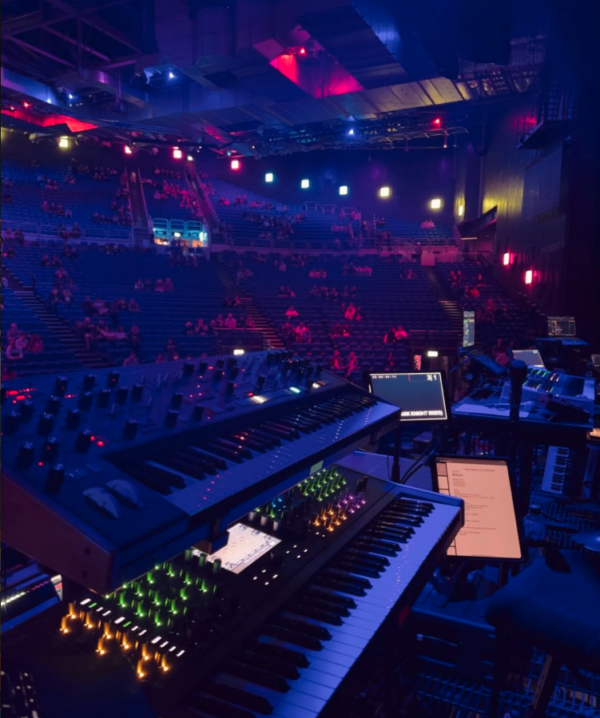
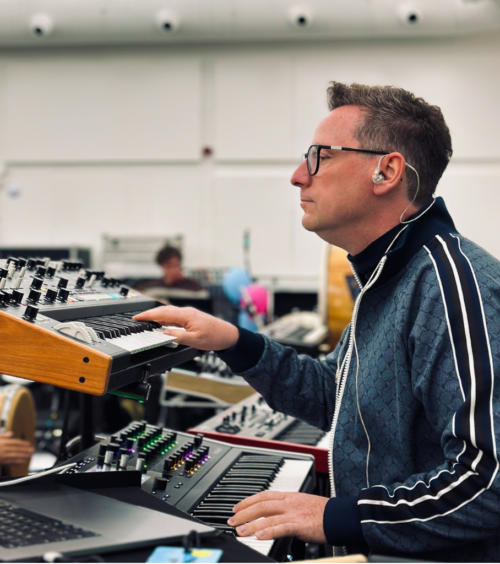
For the F1 soundtrack, we use three Waldorf Quantums on stage with completely different lead sounds. This creates a uniquely massive lead sound that we use to play the main theme.
Are there sounds or parts that you deliberately play only on certain instruments?
On stage, I use our The Legend HZ by Synapse Audio for huge bass sounds, which Hans and I further developed together.
For pads, lead sounds, and sequences, I use the Waldorf Quantum.
How closely does the live setup match the studio recordings in terms of equipment?
Our live setup is basically our studio setup.
I think that’s unique and has never existed on this scale before.
You could say that we feel on stage as if we were in our own home studio :-)
Setup & Technology on Stage
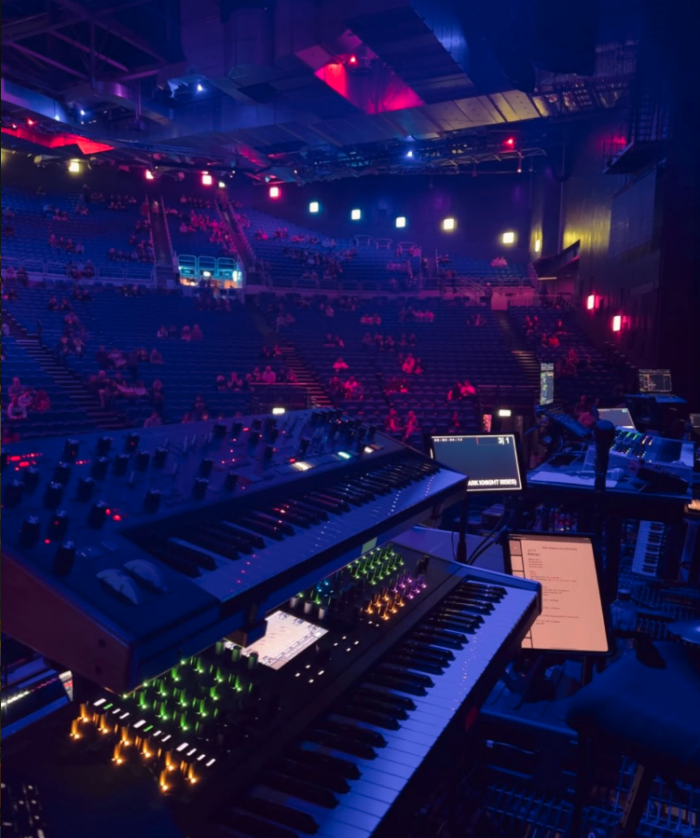
We noticed that alongside other major brands, you use several Waldorf instruments, including 2–3 Quantums and 1–2 Iridium keyboards. How does Waldorf fit into such a large setup with different manufacturers?
Every synthesizer has its own sound. The Quantum and Iridium fit particularly well on stage because of their versatility.
Of course, we also use the Quantum for sequencer sounds, which can be realized very well with its fast filters.
Is it more about sound layering, redundancy, or different roles within the setup?
It’s about layering different tonal colors.
For the F1 soundtrack, we use three Waldorf Quantums on stage with completely different lead sounds. This creates a uniquely massive lead sound that we use to play the main theme.
Are there sounds or parts that you deliberately play only on certain instruments?
On stage, I use our The Legend HZ by Synapse Audio for huge bass sounds, which Hans and I further developed together.
For pads, lead sounds, and sequences, I use the Waldorf Quantum.
How closely does the live setup match the studio recordings in terms of equipment?
Our live setup is basically our studio setup. I think that’s unique and has never existed on this scale before.
You could say that we feel on stage as if we were in our own home studio :-)
Setup & Technology on Stage
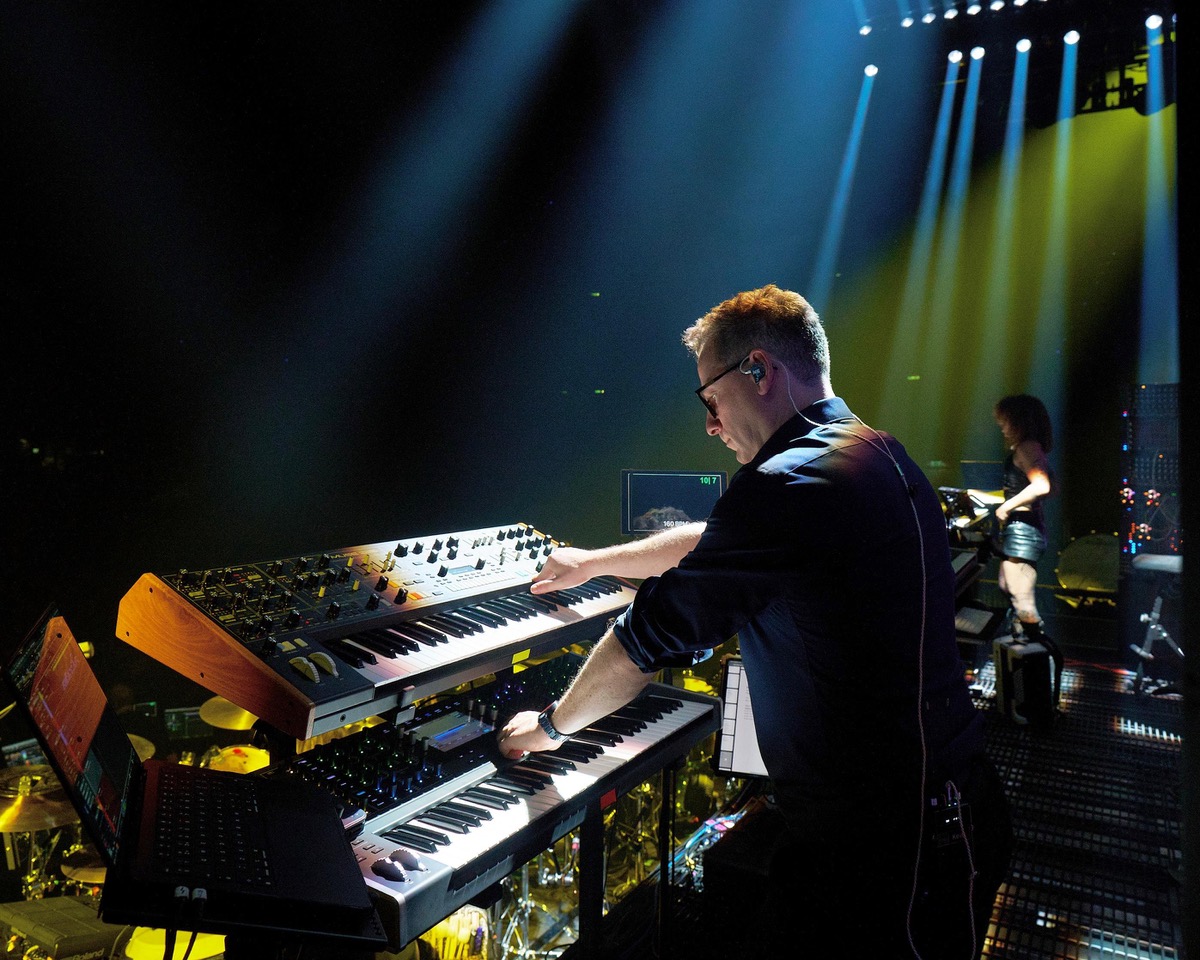
We noticed that alongside other major brands, you use several Waldorf instruments, including 2–3 Quantums and 1–2 Iridium keyboards. How does Waldorf fit into such a large setup with different manufacturers?
Every synthesizer has its own sound. The Quantum and Iridium fit particularly well on stage because of their versatility.
Of course, we also use the Quantum for sequencer sounds, which can be realized very well with its fast filters.
Is it more about sound layering, redundancy, or different roles within the setup?
It’s about layering different tonal colors.
For the F1 soundtrack, we use three Waldorf Quantums on stage with completely different lead sounds. This creates a uniquely massive lead sound that we use to play the main theme.
Are there sounds or parts that you deliberately play only on certain instruments?
On stage, I use our The Legend HZ by Synapse Audio for huge bass sounds, which Hans and I further developed together.
For pads, lead sounds, and sequences, I use the Waldorf Quantum.
How closely does the live setup match the studio recordings in terms of equipment?
Our live setup is basically our studio setup. I think that’s unique and has never existed on this scale before.
You could say that we feel on stage as if we were in our own home studio :-)
Creativity & Workflow
How do you generally approach new sounds or musical ideas?
I try to forget everything I did before. Whenever I start a new sound set, I act as if I’ve never created one before. That’s what makes it so exciting for me to invent new things that may never have existed before.
Do your best ideas emerge more through structure or spontaneity?
Both. The spontaneous sounds are the most exciting patches for me.
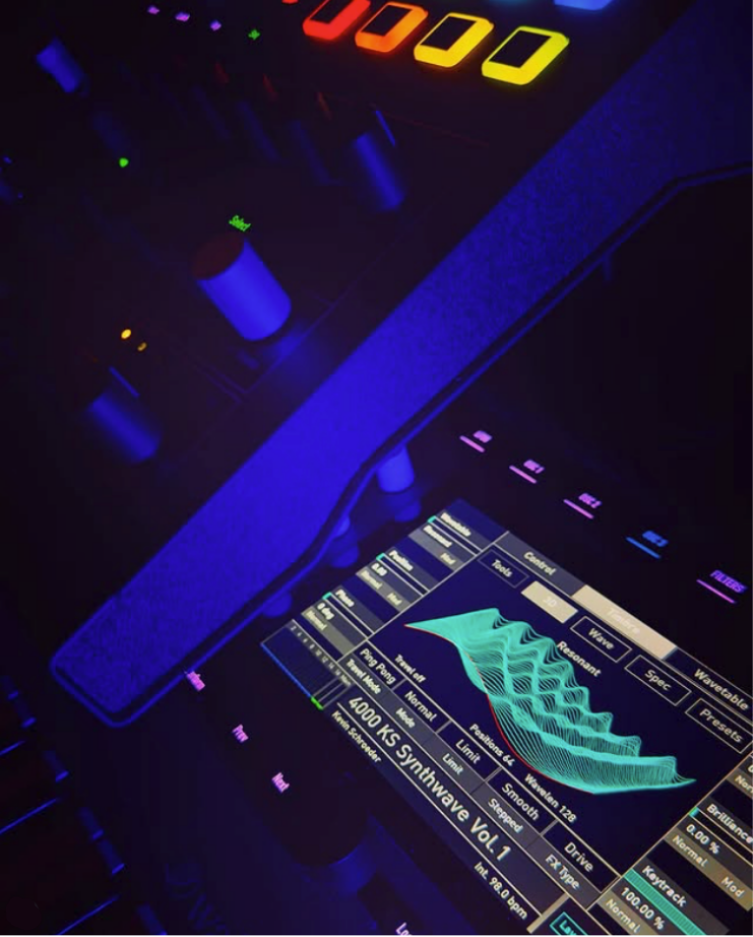
I see colors in my mind, bright or dark places. You’re flying through a universe without a destination—a journey into the unknown.
Structured sounds, on the other hand, are planned and sometimes less exciting to me.
How do you stay inspired after creating thousands of patches?
There are limitless possibilities when creating patches—that’s exactly what inspires me.
How important is technology compared to feeling and intuition?
I believe everything has to work together harmoniously to achieve a good result.
How has your workflow changed in recent years?
It changes from time to time. I try not to stand still because that quickly becomes boring.
Of course, after many years, experience grows as well, and you reach your goals much faster than you did 20 years ago.
Creativity & Workflow
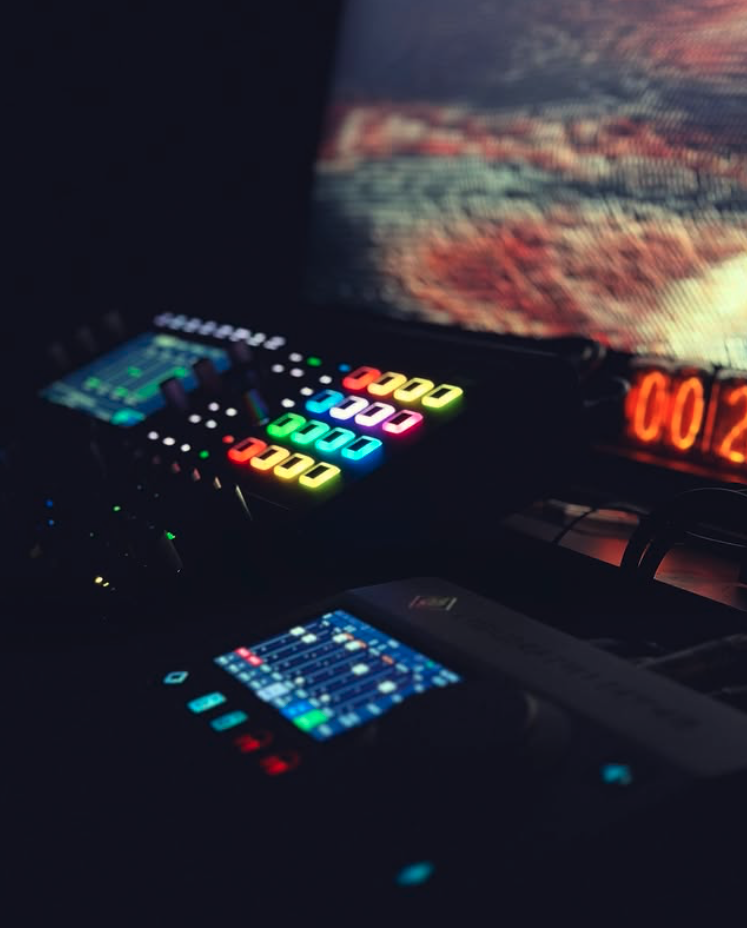
How do you generally approach new sounds or musical ideas?
I try to forget everything I did before. Whenever I start a new sound set, I act as if I’ve never created one before. That’s what makes it so exciting for me to invent new things that may never have existed before.
Do your best ideas emerge more through structure or spontaneity?
Both. The spontaneous sounds are the most exciting patches for me.
I see colors in my mind, bright or dark places. You’re flying through a universe without a destination—a journey into the unknown.
Structured sounds, on the other hand, are planned and sometimes less exciting to me.
How do you stay inspired after creating thousands of patches?
There are limitless possibilities when creating patches—that’s exactly what inspires me.
How important is technology compared to feeling and intuition?
I believe everything has to work together harmoniously to achieve a good result.
How has your workflow changed in recent years?
It changes from time to time. I try not to stand still because that quickly becomes boring.
Of course, after many years, experience grows as well, and you reach your goals much faster than you did 20 years ago.
Creativity & Workflow
How do you generally approach new sounds or musical ideas?
I try to forget everything I did before. Whenever I start a new sound set, I act as if I’ve never created one before. That’s what makes it so exciting for me to invent new things that may never have existed before.
Do your best ideas emerge more through structure or spontaneity?
Both. The spontaneous sounds are the most exciting patches for me.
I see colors in my mind, bright or dark places. You’re flying through a universe without a destination—a journey into the unknown.
Structured sounds, on the other hand, are planned and sometimes less exciting to me.
How do you stay inspired after creating thousands of patches?
There are limitless possibilities when creating patches—that’s exactly what inspires me.
How important is technology compared to feeling and intuition?
I believe everything has to work together harmoniously to achieve a good result.
How has your workflow changed in recent years?
It changes from time to time. I try not to stand still because that quickly becomes boring.
Of course, after many years, experience grows as well, and you reach your goals much faster than you did 20 years ago.
Sound Design
What makes a really good sound for you?
A good sound should work musically because that’s what sounds are programmed for.
The “Worm Thumper” that I programmed for the film Dune obviously doesn’t function musically—that was more of an exception :-))
When do you decide that a sound is “finished”?
That’s difficult to explain, but a finished sound should feel rounded and complete.
Do you work from the musical context or develop sounds independently?
Always within the musical context. And because I’m also a musician, I know quite precisely whether a sound works musically or not.
What role does sound design play for you in performance today?
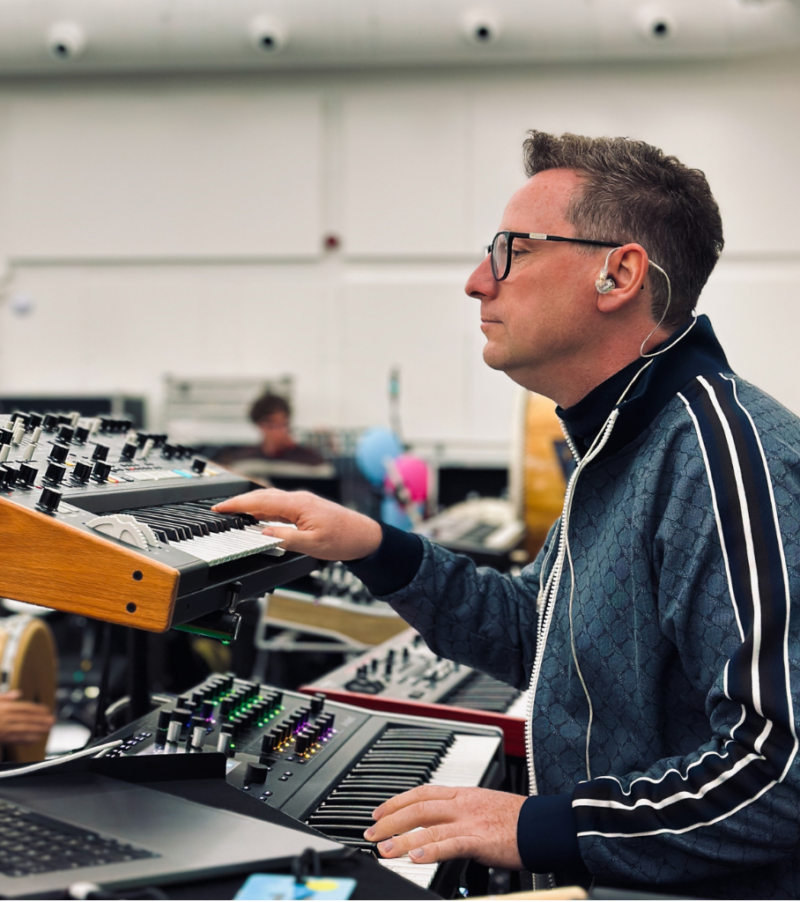
An important one, because all the sounds I play in Hans Zimmer Live were programmed by me.
I’ve also programmed horns that sound deceptively realistic. I play them in Gladiator, The Dark Knight, and Man of Steel. However, I programmed those horns using ZebraHZ by u-he.
Sound Design
What makes a really good sound for you?
A good sound should work musically because that’s what sounds are programmed for.
The “Worm Thumper” that I programmed for the film Dune obviously doesn’t function musically—that was more of an exception :-))
When do you decide that a sound is “finished”?
That’s difficult to explain, but a finished sound should feel rounded and complete.
Do you work from the musical context or develop sounds independently?
Always within the musical context. And because I’m also a musician, I know quite precisely whether a sound works musically or not.
What role does sound design play for you in performance today?
An important one, because all the sounds I play in Hans Zimmer Live were programmed by me.
I’ve also programmed horns that sound deceptively realistic. I play them in Gladiator, The Dark Knight, and Man of Steel. However, I programmed those horns using ZebraHZ by u-he.
Sound Design
What makes a really good sound for you?
A good sound should work musically because that’s what sounds are programmed for.
The “Worm Thumper” that I programmed for the film Dune obviously doesn’t function musically—that was more of an exception :-))
When do you decide that a sound is “finished”?
That’s difficult to explain, but a finished sound should feel rounded and complete.
Do you work from the musical context or develop sounds independently?
Always within the musical context. And because I’m also a musician, I know quite precisely whether a sound works musically or not.
What role does sound design play for you in performance today?
An important one, because all the sounds I play in Hans Zimmer Live were programmed by me.
I’ve also programmed horns that sound deceptively realistic. I play them in Gladiator, The Dark Knight, and Man of Steel. However, I programmed those horns using ZebraHZ by u-he.
Collaboration with Waldorf Music
How do you approach creating a soundset for Waldorf?
I approach every sound set as if I had never created one before :) But of course, all sounds should be musically usable—that aspect is very important to me. Naturally, I always try to develop new sounds and avoid being influenced by external factors.
You’ve already developed sounds for Waldorf, what appeals to you about this collaboration?
What particularly attracted me was the Iridium Desktop and its possibilities. Later, the Iridium Keyboard was added, which I used to create the Synthwave soundset. With the Iridium Desktop, I can comfortably program sound sets in bed or out on a sunny terrace.
For me, music, sounds, and nature are very closely connected. That’s why my studio always needs a window :-)
The ability to work with two layers and two sequencers on the hardware also inspired me greatly.
I love creating sequences because they’re often a great creative starting point for producing music.
What distinguishes Waldorf from other manufacturers for you?
I enjoy programming with my hands, and the mouse can stay where it is.
Quantum and Iridium can do things that I previously only knew from software.
I especially like the large modulation matrix, which allows me to connect anything I can think of.
However, I do miss so-called multi-stage envelope generators. They allow you to build your own envelopes and create even more rhythmic ideas. Maybe I can still convince Waldorf to add them :)
Are there specific sonic characteristics that you intentionally create with Waldorf?
I often use wavetable and granular synthesis.
The latter integrates particularly well into atmospheric sounds.
Is there a sound you’ve programmed on Waldorf instruments that is especially close to your heart?
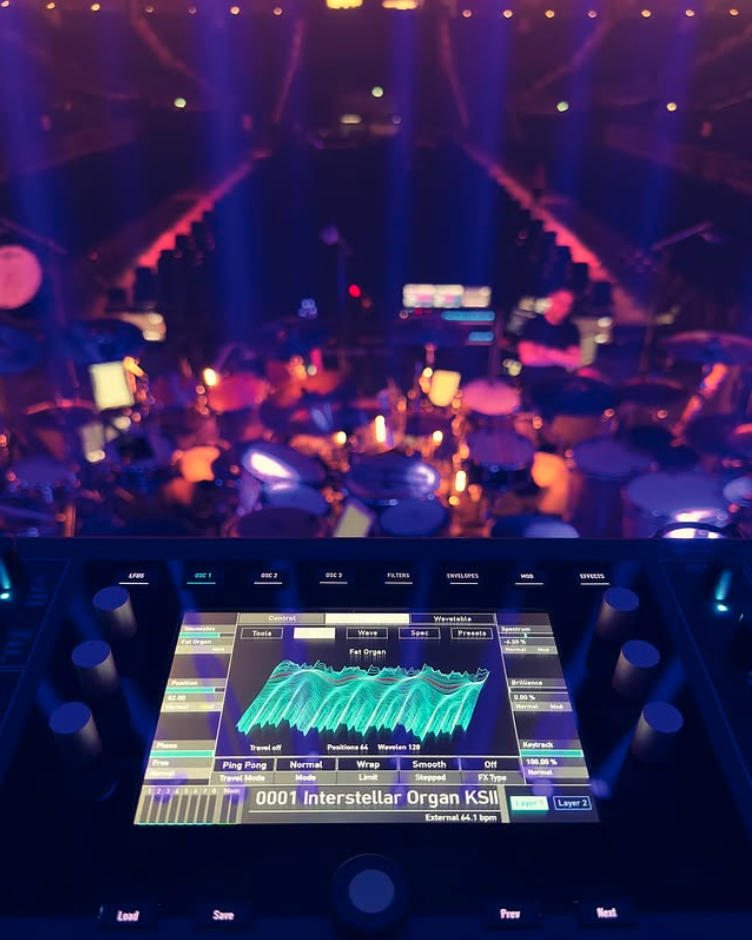
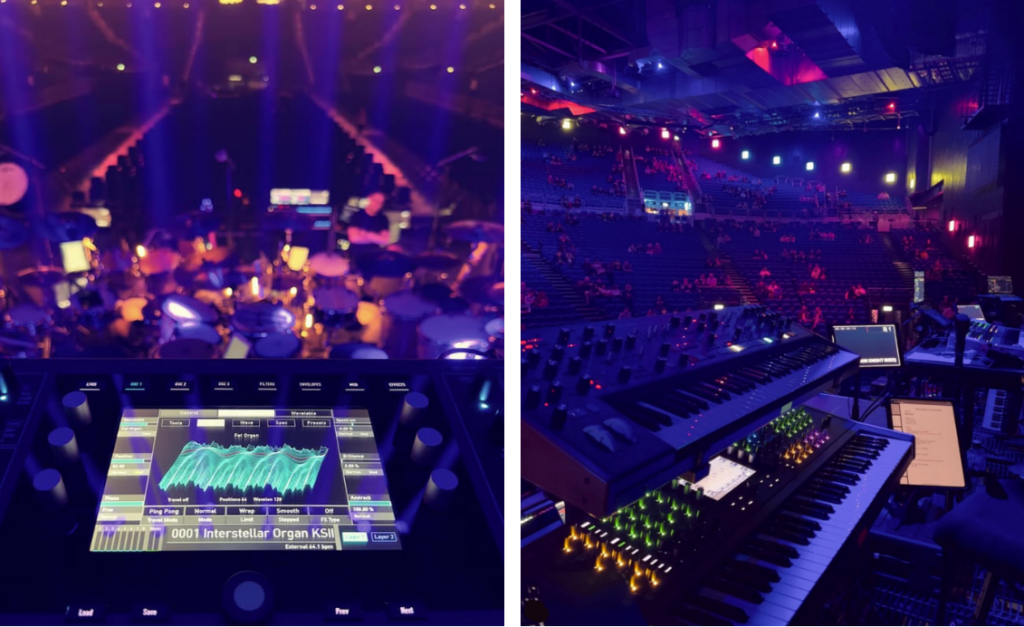
Yes, I programmed an organ sound on the Waldorf Quantum that Hans and I play on stage during Interstellar.
Collaboration with Waldorf Music
How do you approach creating a soundset for Waldorf?
I approach every sound set as if I had never created one before :) But of course, all sounds should be musically usable—that aspect is very important to me. Naturally, I always try to develop new sounds and avoid being influenced by external factors.
You’ve already developed sounds for Waldorf, what appeals to you about this collaboration?
What particularly attracted me was the Iridium Desktop and its possibilities. Later, the Iridium Keyboard was added, which I used to create the Synthwave soundset. With the Iridium Desktop, I can comfortably program sound sets in bed or out on a sunny terrace.
For me, music, sounds, and nature are very closely connected. That’s why my studio always needs a window :-)
The ability to work with two layers and two sequencers on the hardware also inspired me greatly.
I love creating sequences because they’re often a great creative starting point for producing music.
What distinguishes Waldorf from other manufacturers for you?
I enjoy programming with my hands, and the mouse can stay where it is.
Quantum and Iridium can do things that I previously only knew from software.
I especially like the large modulation matrix, which allows me to connect anything I can think of.
However, I do miss so-called multi-stage envelope generators. They allow you to build your own envelopes and create even more rhythmic ideas. Maybe I can still convince Waldorf to add them :)
Are there specific sonic characteristics that you intentionally create with Waldorf?
I often use wavetable and granular synthesis.
The latter integrates particularly well into atmospheric sounds.
Is there a sound you’ve programmed on Waldorf instruments that is especially close to your heart?
Yes, I programmed an organ sound on the Waldorf Quantum that Hans and I play on stage during Interstellar.
Collaboration with Waldorf Music
How do you approach creating a soundset for Waldorf?
I approach every sound set as if I had never created one before :) But of course, all sounds should be musically usable—that aspect is very important to me. Naturally, I always try to develop new sounds and avoid being influenced by external factors.
You’ve already developed sounds for Waldorf, what appeals to you about this collaboration?
What particularly attracted me was the Iridium Desktop and its possibilities. Later, the Iridium Keyboard was added, which I used to create the Synthwave soundset. With the Iridium Desktop, I can comfortably program sound sets in bed or out on a sunny terrace.
For me, music, sounds, and nature are very closely connected. That’s why my studio always needs a window :-)
The ability to work with two layers and two sequencers on the hardware also inspired me greatly.
I love creating sequences because they’re often a great creative starting point for producing music.
What distinguishes Waldorf from other manufacturers for you?
I enjoy programming with my hands, and the mouse can stay where it is.
Quantum and Iridium can do things that I previously only knew from software.
I especially like the large modulation matrix, which allows me to connect anything I can think of.
However, I do miss so-called multi-stage envelope generators. They allow you to build your own envelopes and create even more rhythmic ideas. Maybe I can still convince Waldorf to add them :)
Are there specific sonic characteristics that you intentionally create with Waldorf?
I often use wavetable and granular synthesis.
The latter integrates particularly well into atmospheric sounds.
Is there a sound you’ve programmed on Waldorf instruments that is especially close to your heart?
Yes, I programmed an organ sound on the Waldorf Quantum that Hans and I play on stage during Interstellar.
New Soundset & Outlook
You’re working on a new soundset, what direction will it take?
I’ve started some new things for the Iridium/Quantum. But it’s still too early to talk seriously about it.
There are many experiments happening at the moment :-)
Is there a specific musical concept or theme behind it?
I always make sure that the sound truly works in the context of the music I’m producing. Basically, any concept is possible—from EDM and synthwave to cinematic music.
Which sound from it are you personally most proud of?
The organ for Interstellar on the Waldorf Quantum and several patches that work with two sequencers.
Follow Kevin Schroeder
New Soundsets & Outlook
You’re working on a new soundset, what direction will it take?
I’ve started some new things for the Iridium/Quantum. But it’s still too early to talk seriously about it.
There are many experiments happening at the moment :-)
Is there a specific musical concept or theme behind it?
I always make sure that the sound truly works in the context of the music I’m producing. Basically, any concept is possible—from EDM and synthwave to cinematic music.
Which sound from it are you personally most proud of?
The organ for Interstellar on the Waldorf Quantum and several patches that work with two sequencers.
New Soundsets & Outlook
You’re working on a new soundset, what direction will it take?
I’ve started some new things for the Iridium/Quantum. But it’s still too early to talk seriously about it.
There are many experiments happening at the moment :-)
Is there a specific musical concept or theme behind it?
I always make sure that the sound truly works in the context of the music I’m producing. Basically, any concept is possible—from EDM and synthwave to cinematic music.
Which sound from it are you personally most proud of?
The organ for Interstellar on the Waldorf Quantum and several patches that work with two sequencers.
